Our Everyday Bread
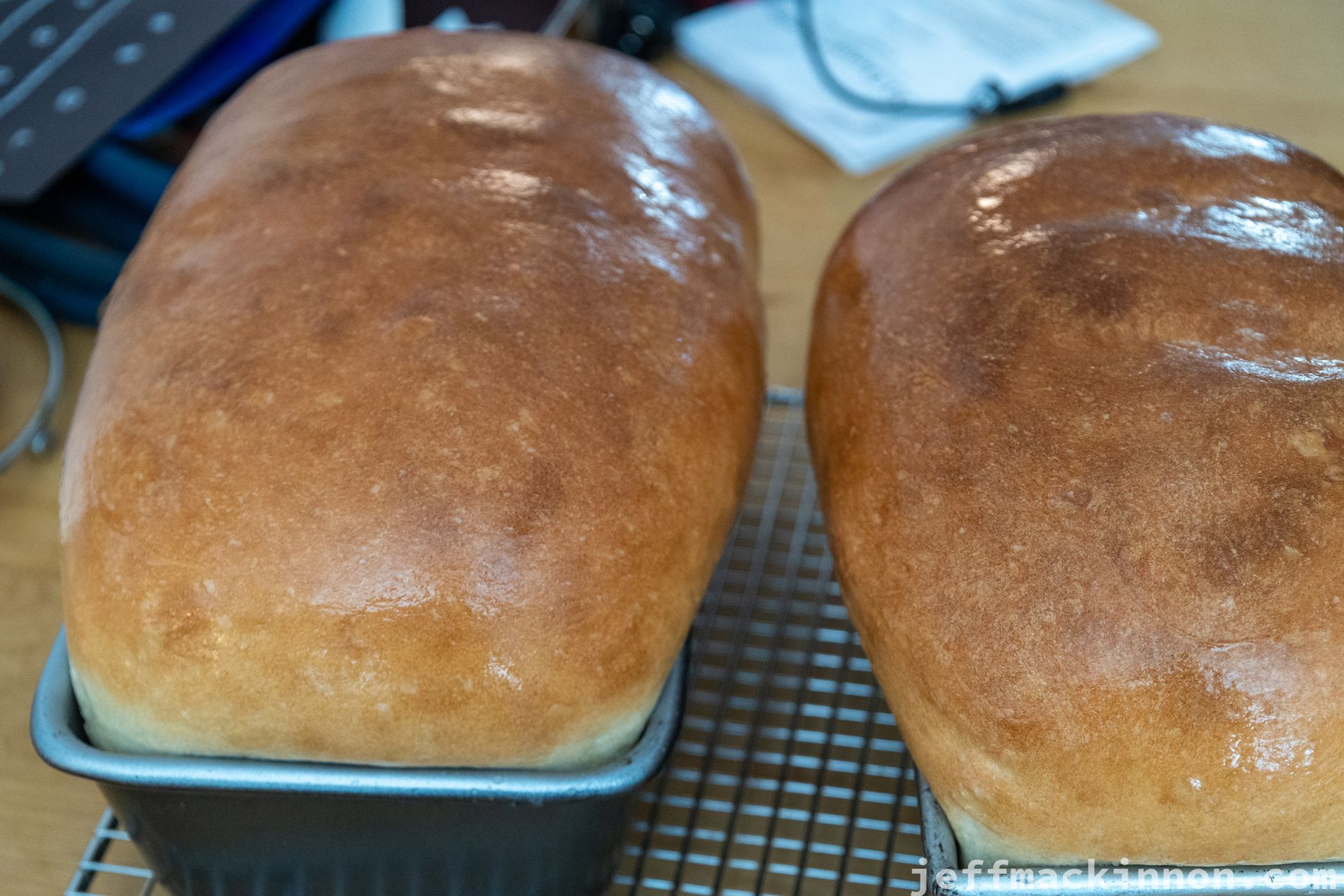
I'm a little surprised that I haven't already posted this recipe in my recipe format, so this post is to remedy this. Its a recipe from the Longbourn Farm blog that we make most weeks. Although I do use less flour because 8 C makes loaves that are a touch too big, so I also use a little less water too.
Basic White Bread
- ~6 C flour
- 2 TSP salt
- 1-1/2 TB dry yeast
- 1/4 C honey
- ~2-1/2 C warm water
- 2 TB melted butter
Basic White Bread- continued
- Combine the warm water, yeast and honey in a bowl to activate the yeast.
- Combine four and salt in a large bowl.
- Stir in the wet mixture slowly.
- Add a bit more flour if the mixture is too sticky, add a spoonful at a time. If the mixture is too dry add a bit of water. (see hints)
- Knead the dough until its smooth. Takes about 10min by hand.
- Cover the dough and leave in a warm place until doubled (about an hour).
- Grease two bread pans.
- Punch down the dough and form into two loaves. Place in the bread pans to proof.
- Cover the pans and place in a warm place until doubled (about an hour)
- Bake at 375F for 25min, remove and prush with butter. Put back in oven until done (about 10min)
Hints and Tips
- I like to let the yeast sit to the side for about 5 min. I will do this first, and then get everything else prepared.
- The mixture is "perfect" when it just sticks to the sides, but doesn't leave any dough. It all holds together without leaving any on the sides.
- You can determine the bread is done in a few ways. When it is well golden brown, when you tap it and it sounds hollow, and finally if it is at 190F internally.
- I typically cover the bowl loosly with plastic wrap for the first rise, and a thick cotton tea towel for the proofing.
My Notes
The trick with bread is practice. The first couple times I made this recipe it wasn't great, but after a few years I'm an old hat. The amount of water/flour changes with a lot of different things like the flour quality, humidity, etc. It may take a touch more water in the winter vs summer, etc. Practice makes perfect.
Also, don't get too hung up on the amount of yeast, if you add a bit too much it will probably rise a bit faster, and too little you may have to leave it a bit longer.